Getting your first RC car is exciting.
But after the first few minutes, most people hit the same point.
The car feels hard to control, movements are unpredictable, and it’s not as smooth as expected.
That’s normal.
RC cars are simple to start, but they take a bit of understanding to enjoy properly.
Let’s break it down in a way that actually helps.
What an RC Car Really Needs From You
An RC car doesn’t just move on its own.
It reacts to:
- Your speed control
- Your steering input
- Your timing
What this really means is you’re not just driving.
You’re managing how the car behaves.
Once you understand that, things start making sense.
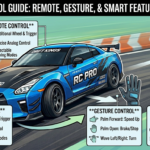
Understanding the Basic Controls
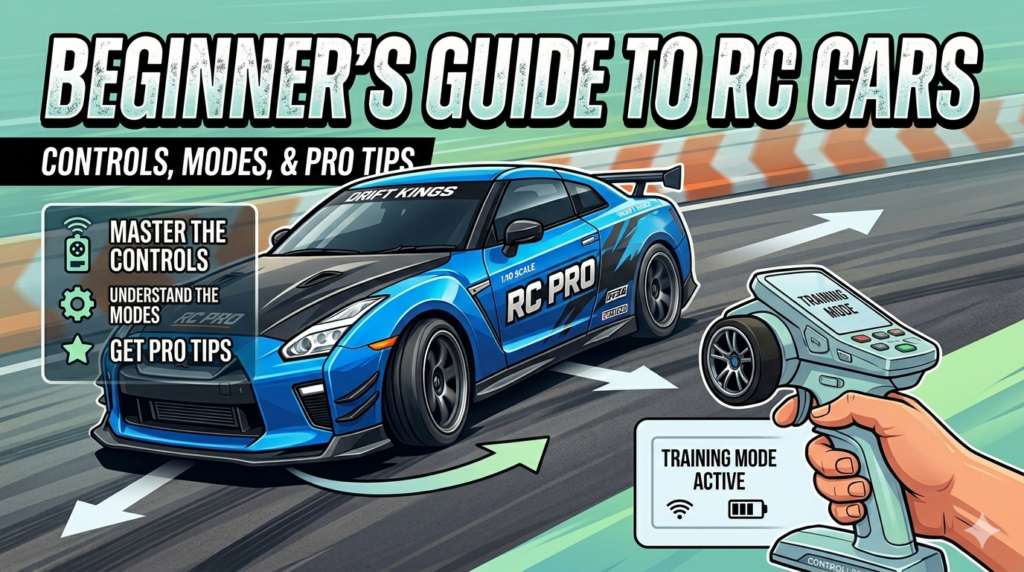
Before anything else, get comfortable with the controller.
Most RC cars use:
- A trigger for speed
- A wheel or joystick for direction
Here’s the important part.
👉 Don’t treat it like a video game
👉 Treat it like real driving
Press slowly.
Turn gently.
Let the car respond.
The smoother your inputs, the smoother your driving.
Start Slow, Always
It’s tempting to go full speed.
But speed without control is useless.
Start with:
- Slow forward movement
- Wide turns
- Controlled stopping
Spend a few minutes just getting used to how the car reacts.
This builds confidence quickly.
Different Control Modes Explained
Many modern RC cars come with more than just a remote.
Let’s simplify it.
Remote Control
Your main and most reliable control method
Best for learning and precision
Gesture Control
Control using hand movement
Fun and interactive, but needs practice
App Control
Control using your phone
Useful for extra features and smoother adjustments
You don’t have to master all at once.
Start with remote. Add others later.
Learning to Turn Properly
Turning is where most beginners struggle.
Common mistake:
Turning too much, too fast.
Instead:
- Slow down before turning
- Turn gradually
- Adjust throttle while turning
This keeps the car stable and prevents spinning out.
How to Practice Without Getting Frustrated
You don’t need complicated setups.
Just a small open space is enough.
Try this:
- Drive in straight lines
- Practice circles
- Do slow figure 8 patterns
This improves:
- Control
- Coordination
- Confidence
And most importantly, it keeps things fun.
Choosing the Right Surface
Your surface affects everything.
- Smooth floors → easy control and drifting
- Rough ground → more grip, less slide
- Uneven terrain → harder to control
If you’re just starting, go with smooth surfaces.
It makes learning easier.
Basic Maintenance You Shouldn’t Ignore
A lot of beginners forget this.
If your car feels off, it might not be you.
Check:
- Battery charge
- Wheels condition
- Loose parts
A well-maintained car is easier to control.
Pro Tips That Actually Help
These are simple but effective.
- Use small inputs, not sudden ones
- Learn control before speed
- Practice regularly, even for short time
- Don’t rush advanced moves
- Focus on smooth driving, not flashy tricks
These habits make a huge difference over time.
Common Beginner Mistakes
Let’s call them out.
- Going full speed immediately
- Oversteering
- Not adjusting speed while turning
- Practicing on difficult surfaces
- Expecting quick mastery
Everyone goes through this.
The key is to stay consistent.
Final Thoughts
RC cars are easy to start but rewarding to master.
The more you understand control, the more fun it becomes.
You don’t need to be perfect.
You just need to keep practicing the right way.
If you’ve just started, take it slow and enjoy the process.
If you’ve been struggling, go back to basics.
That’s where the real improvement happens.